
Article: Why Hyperpigmentation is Harder to Treat on Dark Skin, And What Actually Works


Why Hyperpigmentation is Harder to Treat on Dark Skin, And What Actually Works
Why Hyperpigmentation is Harder to Treat on Dark Skin, And What Actually Works
If you've spent years trying product after product to fade dark spots, you're not alone, and you're not imagining it. Hyperpigmentation on darker skin tones genuinely is harder to treat than on lighter skin. There's a real biological reason for this, and most mainstream skincare brands completely ignore it.
At DW Aesthetics, we've built our entire product range around this reality. In this guide, we're going to explain exactly what's happening with your skin, why most products fall short, and what ingredients actually make a difference on Melanated skin.
What Is Hyperpigmentation?
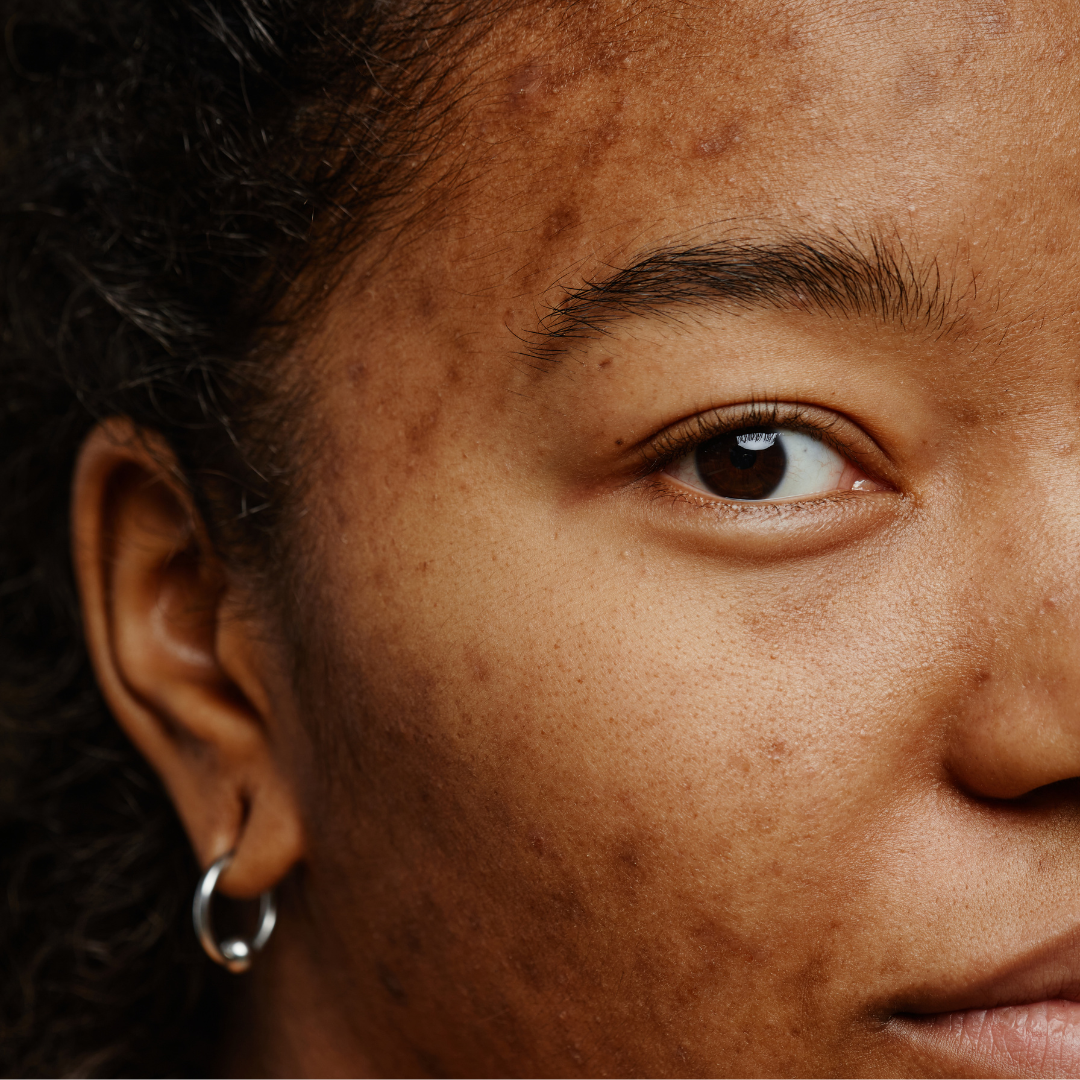
Hyperpigmentation is the overproduction of melanin, the pigment responsible for your skin colour, in specific areas of the skin. It shows up as dark spots, uneven skin tone, melasma, post-acne marks or patches of discolouration.
It's triggered by inflammation, sun damage, hormonal changes, acne or skin trauma. When your skin is irritated or injured, melanin producing cells called melanocytes go into overdrive, flooding the area with excess pigment as a protective response. The result is a dark spot that can persist long after the original irritation has healed.
Why Is It Worse on Darker Skin Tones?
Melanin rich skin has significantly more active melanocytes than lighter skin tones. This means the hyperpigmentation response is faster, stronger and longer lasting. A dark spot that might fade in a few weeks on a lighter skin tone can take months, or even years, to fade on Melanated skin without the right treatment.
Post inflammatory hyperpigmentation (PIH) is particularly common and persistent on darker skin. Any inflammation, from a spot, a scratch, a product reaction, or even friction from tight clothing, can leave behind a dark mark that lingers. The cruel irony is that many so-called brightening products can actually cause more inflammation on darker skin, making the problem worse.
The Ingredients That Actually Work
Not all brightening ingredients are created equal. Here are the ones with the strongest evidence for treating hyperpigmentation on Melanated skin:
- Alpha-Arbutin, a gentle, highly effective melanin inhibitor that slows down pigment production without irritating darker skin tones
- Kojic Acid, which inhibits the enzyme responsible for melanin production and is particularly effective for stubborn dark spots and post-acne marks
- AHAs, including Glycolic and Lactic Acid, which accelerate cell turnover to shed pigmented surface cells
- BHAs, including Salicylic Acid, which penetrates pores to reduce the inflammation that triggers hyperpigmentation
- Vitamin C (L-Ascorbic Acid), which brightens skin and neutralises free radical damage from UV exposure
- Niacinamide (Vitamin B3), which reduces melanin transfer to skin cells and strengthens the skin barrier
- SPF, the most important preventative step, as UV exposure is the number one cause of new hyperpigmentation
Why Most Products Don't Work for Melanated Skin
Most brightening products were developed and tested on lighter skin tones. Ingredients that are too aggressive cause more inflammation and more pigmentation. Concentrations designed for lighter skin may be either too weak or too sensitising. Many products focus purely on surface brightening without addressing the underlying melanin overproduction.
This is exactly why DW Aesthetics exists. Every product in our range is specifically formulated for Melanated skin, not adapted from mainstream products but built from scratch with the unique biology of darker skin tones in mind.
The DW Aesthetics Approach
Our Skin Radiant range combines AHAs, BHAs, Alpha-Arbutin, Kojic Acid, Vitamin C and Hyaluronic Acid in formulations that work with darker skin, not against it. Most customers see visible improvement within 4 to 6 weeks, with significant results by 8 to 12 weeks.
How to Build an Effective Routine for Hyperpigmentation
- Cleanse with our Deep Cleansing Gel to remove impurities and begin the exfoliation process
- Treat in the morning with our Vitamin C Glow Serum to brighten and protect against UV damage
- Treat in the evening with our Active Fading Serum to target dark spots directly
- Moisturise with our Skin Radiant Corrective Complexion Moisturiser to lock in hydration and support your skin barrier
- Protect every morning with our COSRX SPF50 Sunscreen, every single day without fail
Not Sure Where to Start?
Everyone's skin is different. Our Beauty Experts will review your skin and build you a bespoke skincare routine, completely free, no obligation, no hard selling.
Start Your Free Skin Consultation Today
You deserve beautiful skin. 💜
Read more
What is Hyperpigmentation? Everything You Need to Know
Hyperpigmentation causes dark spots and uneven skin tone on Melanated skin. Learn what causes it, the different types, and how to treat it effectively.
Read more