

Facial Astringent vs Toner: What is the Difference and Which Does Your Skin Need?
Astringent and toner are two of the most confused products in skincare. They sit in the same part of your routine, they come in similar bottles, and many people use the terms interchangeably. But they are not the same thing, and using the wrong one for your skin type can make your skin worse rather than better.
This guide explains exactly what each product does, how they differ, which skin types should use each one, and how to build them into a routine that actually works for Melanated skin.
What is a Toner?
A toner is a lightweight liquid applied to the skin after cleansing. Its primary job is to restore the skin's pH balance after washing, which can temporarily disrupt the skin's natural slightly acidic environment. Beyond pH balancing, modern toners often deliver additional benefits depending on their formulation, including hydration, brightening, gentle exfoliation or soothing.
Toners are generally gentle, hydrating and suitable for most skin types including dry, sensitive and combination skin. They prepare the skin to better absorb the serums and moisturisers that follow.
What is a Facial Astringent?
A facial astringent is a stronger, more active liquid that works by constricting the pores, removing excess oil and targeting the bacteria that cause breakouts. Astringents typically contain active ingredients like Salicylic Acid, Witch Hazel, Camphor or alcohol-based compounds that give them their deeper cleansing and pore-tightening action.
Because of their strength, astringents are specifically formulated for oily, acne prone and congested skin types. They are not suitable for dry or sensitive skin as they can strip the skin barrier and cause irritation.
The Key Differences Between Astringent and Toner
Strength and Action
A toner is gentle and primarily balances and prepares the skin. An astringent is active and specifically targets oil, bacteria and congestion. Think of a toner as maintenance and an astringent as targeted treatment.
Key Ingredients
Toners typically contain hydrating ingredients like Hyaluronic Acid, Glycerin, Aloe Vera, Niacinamide or gentle AHAs. Astringents contain stronger actives like Salicylic Acid, Camphor, Witch Hazel or Tea Tree, which are specifically chosen for their oil-controlling and antibacterial properties.
Skin Types
Toners work well for all skin types including dry, normal, combination and sensitive. Astringents are for oily, acne prone and congested skin specifically. Using an astringent on dry or sensitive skin will strip moisture and damage the skin barrier.
Purpose in the Routine
A toner is used daily as part of a balanced routine for everyone. An astringent is used as a targeted treatment for skin that needs active oil control and pore clearing, and may not need to be used twice daily by everyone.
Which One Does Your Skin Need?
You Need a Toner if:
- Your skin is dry, normal or sensitive
- You want to add hydration and prepare your skin for serums
- Your skin feels tight or uncomfortable after cleansing
- You are focused on brightening or evening skin tone rather than controlling oil
- You are not prone to regular breakouts
You Need an Astringent if:
- Your skin is oily or acne prone
- You experience regular breakouts or congestion
- Your pores appear enlarged or frequently blocked
- Your skin looks shiny or greasy by midday
- You are dealing with active spots or blackheads
You Might Need Both if:
You have combination skin with an oily T-zone but drier cheeks. In this case you could apply a targeted astringent to the oily zones and use a gentler toner across the rest of the face, or alternate depending on how your skin behaves on a given day.
Why This Matters More for Melanated Skin
Using the wrong product on Melanated skin carries a higher risk of consequences than on lighter skin tones. If you use an astringent that is too harsh on your skin type, the resulting inflammation and irritation can trigger post-inflammatory hyperpigmentation, leaving dark marks that can take months to fade. This is why choosing the right product for your specific skin type is not just about comfort but about protecting your skin tone.
Equally, if you have oily acne prone Melanated skin and you only use a gentle toner, you are not doing enough to control the oil and bacteria that cause breakouts, which will lead to more spots and more dark marks over time.
Our Astringent Range for Oily and Acne Prone Melanated Skin
Anti Blemish and Acne Astringent
Our Anti Blemish and Acne Astringent is formulated with Salicylic Acid to penetrate deep into the pores, dissolve excess oil and reduce the bacteria that cause breakouts. It clears congestion without over-stripping the skin and is designed specifically for Melanated skin, where the inflammation from breakouts is more likely to leave lasting dark marks. Ideal for daily use on oily and acne prone skin types.
Camphor Clarifying Astringent
Our Camphor Clarifying Astringent provides a deeper, more intensive treatment for skin that needs serious decongesting. Camphor has natural antibacterial and anti-inflammatory properties that work to reduce active spots, tighten pores and calm the skin simultaneously. It is particularly effective for those with persistently oily skin or frequent breakouts. Best used in the evening or a few times a week rather than twice daily for most skin types.
How to Use an Astringent Correctly
- Cleanse first with our Deep Cleansing Gel to remove surface oil and impurities
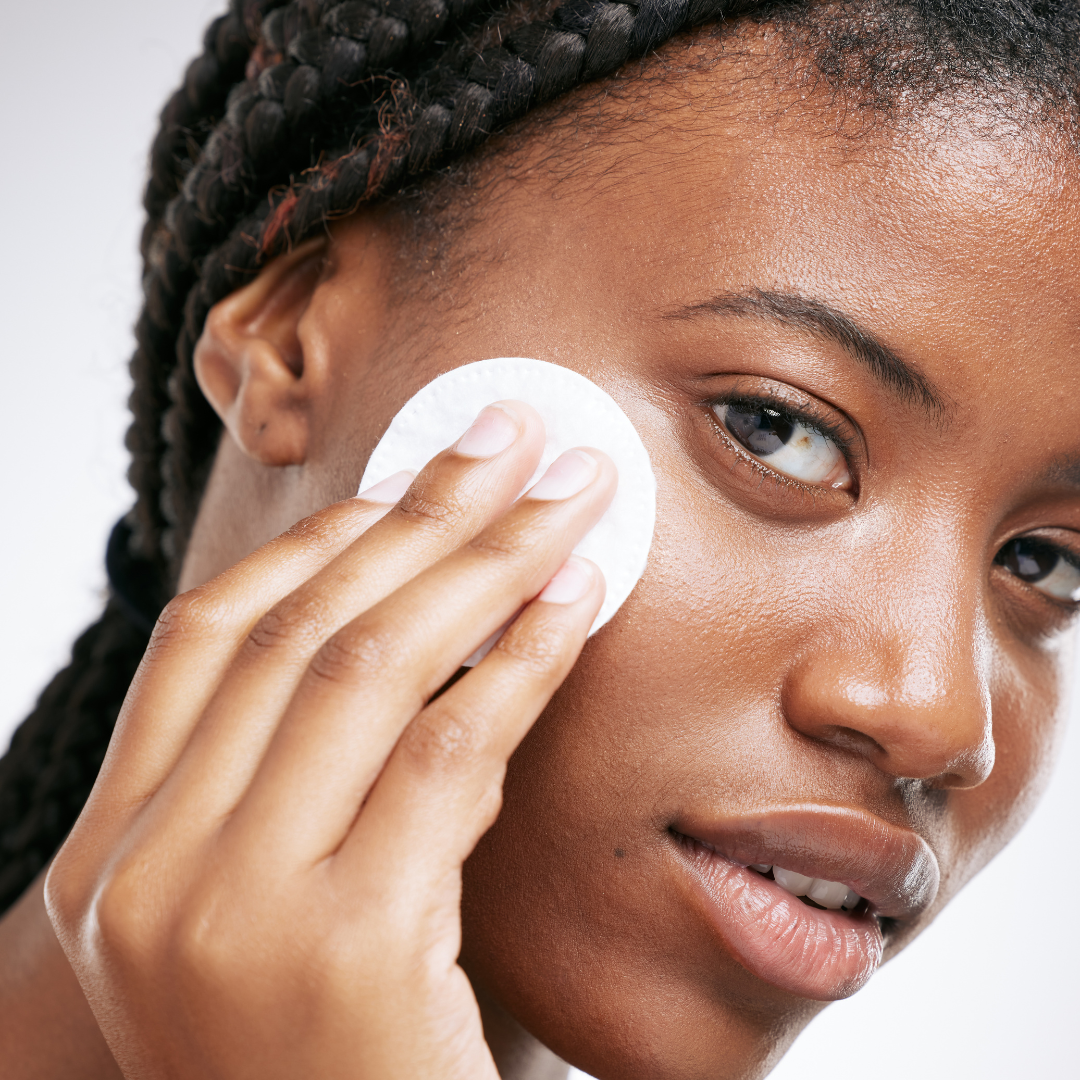
- Apply your astringent to a cotton pad and sweep gently across the oily or congested areas of your face, avoiding the eye area
- Allow to absorb fully before applying any serum or treatment
- Follow with your targeted treatment serum such as our Active Fading Serum in the evening to address any dark marks from previous breakouts
- Moisturise with a lightweight, non-comedogenic moisturiser such as our FadeBright Moisturiser
- Every morning, finish with our COSRX Aloe Soothing SPF50 to protect skin from UV damage that worsens dark marks
Common Mistakes to Avoid
- Using an astringent on dry or sensitive skin strips the moisture barrier and triggers more inflammation
- Over-using an astringent even on oily skin can cause the skin to overproduce oil in response to being over-stripped
- Skipping moisturiser after an astringent because the skin feels clean and tight. Moisture is still essential even for oily skin
- Using astringent without SPF, particularly on Melanated skin where any inflammation from active ingredients can darken the skin
- Expecting a toner to do what an astringent does if you have genuinely oily, congested or acne prone skin
Not Sure Which is Right for Your Skin?
Choosing between a toner and an astringent depends entirely on your skin type, your skin concerns and how your skin behaves day to day. If you are unsure, our Beauty Experts offer a completely free personalised skin consultation to help you identify exactly what your skin needs.
Start your free skin consultation here
You deserve beautiful skin. 💜
Read more
What Does Acne Prone Skin Mean? A Complete Guide for Melanated Skin
If you have been told you have acne prone skin, or if you notice that your skin breaks out regularly, you might be wondering what that actually means and more importantly, what you can do about it....
Read more
Keratosis Pilaris: What Causes "Chicken Skin" and How to Smooth It
What causes keratosis pilaris and the ingredients, glycolic acid, plus hydrators, that smooth rough, bumpy "chicken skin" and strawberry legs.
Read more